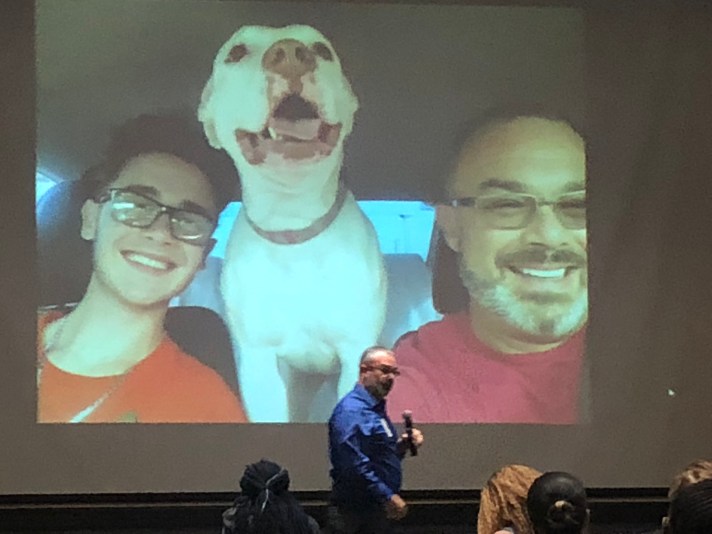
This is a talk at the Memorial Hospital Organ and Tissue Symposium. Legacy and purpose are the topics !!!
This is a talk at the Memorial Hospital Organ and Tissue Symposium. Legacy and purpose are the topics !!!
An individual and an organization’s ability to reach their maximum potential surrounds their capacity to manage change. The need to reframe change management into perspectives that surround communication and accountability are crucial. As Carsten Tams (2018) posits, while managers are busy relentlessly communicating about the change imperative, the design of many organizations slants the playing field toward controllability, stability, routinization, risk-avoidance, zero-tolerance for error, or deference to authority. The “slanting” creates an atmosphere where fluid and transparent communication is stifled. Today’s leaders are stagnating because of a hyperacute focus on controllability, stability, and routinization. All three are the antithesis of innovation, creativity, and inclusivity, which are the backbone of productive organizational cultures. (Nagelbush 2020)
The strategic approach to change management and inclusivity must comprehensively investigate the impact and influence of a lack of inclusivity in organizations—deficiencies in dealing with and finding opportunities for growth within the disruption of change agents when they arise. The strategies and skills required to identify the business problem which drives the projects that I’m selecting surround every organization’s ability to realize the opportunity that comes with the disruption of change. Analyzing strengths and weaknesses and threats provide a chance to see where an organization may be deficient, which allows this author to realize the core competencies of the problem at hand.
Change is one of life’s inevitabilities. Identifying the importance of a strategic and innovative approach to change management is an efficient pathway to sustainable competitive advantage. Aladwana (2001) agrees that top management should proactively deal with this problem instead of reactively confronting it. By leaning into the chaos manifested through change agents, companies can begin to embrace change actively and therefore find purpose in it. Being able to adapt and embrace change agents and the chaos that they foster provides an opportunity to analyze data and more accurately define problems as they arise. (Nagelbush 2020)

 THE CHANGE MENTOR